Start with understanding
Clarify the question, context and limitations before selecting a method.
 ClinicalResearcherAIRESEARCH, WITH REASON.Let’s connect ↗
CLINICAL CURIOSITY. SCIENTIFIC CLARITY.
ClinicalResearcherAI brings your clinical question, study design and evidence into one research workspace. Explore VitalTwin, our synthetic ICU physiology research lab, alongside evidence-led articles on AI in medicine.
Built for researchers. Guided by human judgment.

WATCH · 30 SECONDS · ENGLISH
From telemedicine and wearables to health records and AI: a short introduction to connected care.
Digital health connects people, information, and care. Telemedicine brings consultations closer. Wearable devices track everyday health signals. Electronic health records help teams share information. Artificial intelligence supports analysis, while clinicians guide decisions. Connected tools also support research beyond the clinic. With privacy, security, and strong evidence, digital health can make care more accessible and informed. Explore digital health with Clinical Researcher AI.
EXPLORE BY DOING
Choose a starting point. See what you can explore.
Research and education prototypes · Synthetic examples · Human review required
THE READING ROOM
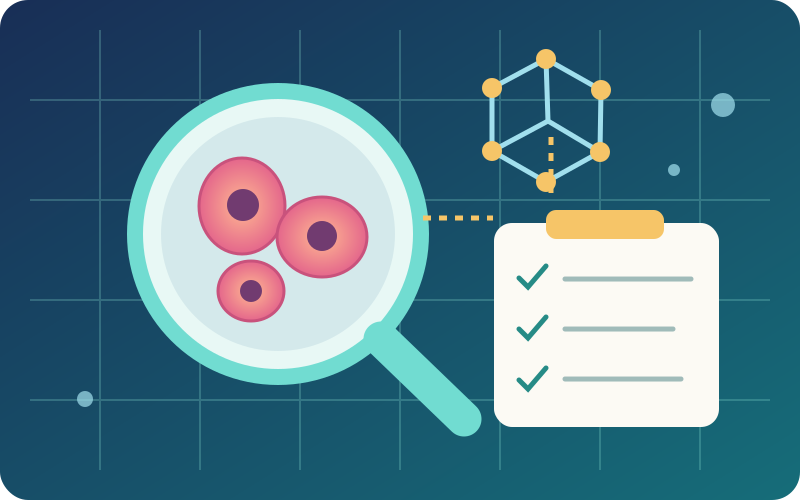
NEW ARTICLE · 19 NOVEMBER 2026
From Better Detection to Better Cancer Care
Screening, pathology and precision oncology: examine measurable benefits, hallucination risks and the evidence needed to improve patient outcomes. Includes 7 references.
Read the article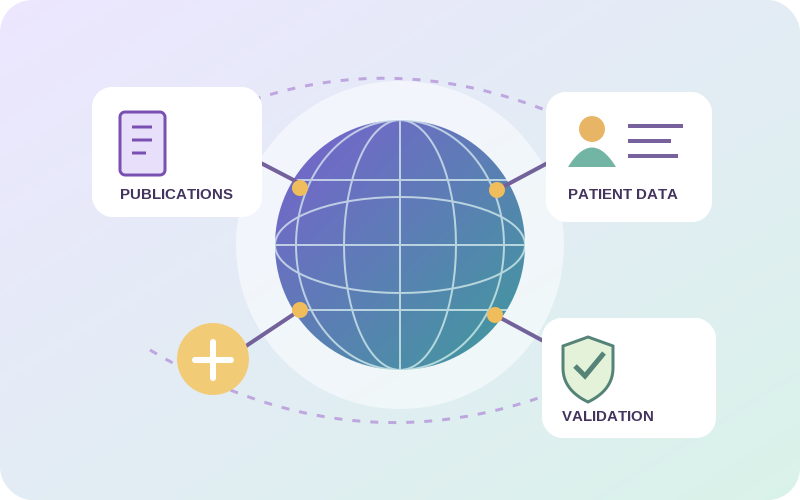
FEATURED ARTICLE · 17 NOVEMBER 2026
Publications, Clinical Validation and Who Is Represented
Who produces medical AI research—and whose patients are represented? Explore country contributions, external validation and the gap between publication volume and clinical evidence. Includes 7 references.
Read the article
FEATURED ARTICLE · 16 NOVEMBER 2026
From Data to Insight, From Insight to Better Care
Clinical text, FHIR analytics and language models: explore what the evidence shows, why AUC is not accuracy, and what safe clinical integration requires. Includes 8 references.
Read the article
FEATURED ARTICLE · 15 NOVEMBER 2026
Care-Process Improvements, Clinical Benefits and the Limits of the Evidence
Better adherence does not automatically mean better patient outcomes. Explore the evidence on mortality, targeted benefits, alert fatigue and safety, with 6 publication references.
Read the articleFEATURED ARTICLE · 15 NOVEMBER 2026
Concrete Applications and Clinical Evidence
From mammography and echocardiography to brain–spine interfaces, surgical robots and drug discovery: explore what these technologies have demonstrated and where the evidence remains limited. Includes 9 original-source references.
Read the articleFEATURED ARTICLE · 15 NOVEMBER 2026
Opportunities, Hallucination Risks and Physician Adoption
Explore the benefits and limitations of AI, why language models can invent facts, and what physician adoption surveys actually measure. Includes 13 original-source references.
Read the articleONE HOME. TWO COMPLEMENTARY IDEAS.
Different starting points, a shared commitment: make the reasoning visible.
Shape a clinical question, plan a study, and approach analysis and writing with an auditable process.
Explore time-varying ICU physiology with synthetic scenarios, transparent calculations and a research lab.
Discover the research lab ↗THE METHOD MATTERS
Clarify the question, context and limitations before selecting a method.
Separate observed results, assumptions and suggestions. Verify sources before relying on them.
Researcher review and explicit analysis approval are part of the workflow.
START WITH A CLEAR QUESTION
ClinicalResearcherAI is a clinical research prototype connecting research questions, study design, evidence review and analysis planning. The research workflows cover developing an idea, preparing a protocol and working with an existing study. The public workspace is a demonstration; availability of a workflow does not mean that a live AI service is connected.
Define the population, intervention or exposure, comparison and outcomes using a PICO or PECO question. Then specify the study design, eligibility criteria, measurements and analysis plan. Explore the protocol planning workflow and review each assumption before analysis.
Our AI in medical research article explains opportunities, hallucination risks and physician adoption surveys, with links to the original publications. Verify every citation and numerical claim before using AI-generated material in a study.
VitalTwin is a browser-based ICU physiology research lab using synthetic scenarios and visible calculation rules. It is an exploratory prototype, not a clinically validated digital twin or a tool for diagnosis or treatment. Try a synthetic ICU scenario.
A CONVERSATION IS A GOOD START