
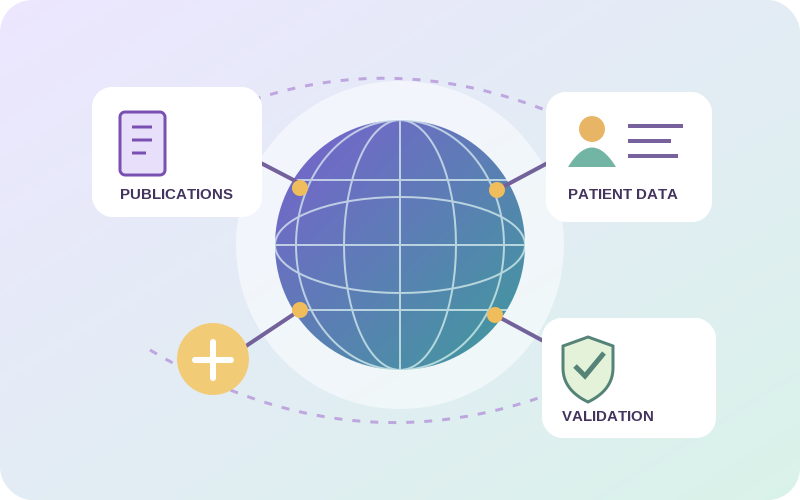
“Which country leads medical AI?” sounds like a simple question. It becomes more useful when we ask what leadership means: producing publications, contributing patient data, testing a system in practice, or showing that it improves outcomes.
These measures describe different parts of the research process. An author’s institutional address does not establish where patients were recruited, and a highly cited paper does not by itself establish clinical usefulness.
Where is medical AI research produced?
Klingelhöfer and colleagues’ 2025 bibliometric study examined Web of Science literature through 2022. Its cumulative publication counts placed the United States and China ahead of the United Kingdom, Germany and South Korea. The authors also reported that China led annual output from 2022 in their dataset. These are historical findings from a particular search, not a live ranking of all research in 2026. [1]
| Country | Publications reported |
|---|---|
| United States | 9,707 |
| China | 7,410 |
| United Kingdom | 2,287 |
| Germany | 1,971 |
| South Korea | 1,761 |
The same study found different rankings when output was considered relative to population or economic resources, and identified a stronger engineering and computational emphasis in India. A single league table therefore conceals differences in scale, research focus and resources. [1]
Where do the patient data come from?
Celi and colleagues studied clinical AI papers indexed in PubMed for 2019. They manually examined database origins in a sample of 600 papers selected from 7,314 eligible articles. The review reported that 40.8% of databases originated in the United States and 13.7% in China. These figures describe the review’s sampled evidence; they are not shares of every medical AI dataset currently in existence. [2]
A later systematic review by Chen and colleagues included 171 studies of mature medical AI, representing 209,772 patients, with a literature search completed in January 2024. High-income and upper-middle-income countries accounted for 95.1% of the included patient cohorts counted at study level. No included study came from a low-income country. This is a distribution of cohorts, not proof that 95.1% of all patients using AI worldwide live in those countries. [4]
Underrepresentation in a review does not establish that a region has no research or no AI use. It does identify an evidence gap: populations missing from evaluation cannot simply be assumed to receive the same performance.
More publications do not automatically mean more clinical evidence
Wang and colleagues’ 2026 scoping review extracted 4,667 primary studies from 218 systematic reviews published between September 2023 and September 2024. In that corpus, 4,114 studies (88.2%) were classified as preclinical development and offline validation, while 113 (2.4%) were randomized controlled trials. Most RCTs were single-center: 76 of 113 (67.3%). These proportions describe the assembled corpus, not an exhaustive census of all medical AI research. [3]
The geographic denominator matters. The United States contributed 36 and China 33 of 140 RCT country contributions, together 49.3%. A multinational trial could count for more than one country. It would therefore be incorrect to say that 49.3% of unique RCTs were conducted exclusively in those two countries. [3]
Offline testing can answer whether a model detects a pattern in existing data. An intervention study asks a different question: what happens when clinicians or patients use it? The endpoint must also be examined—better detection, shorter workflow time and improved survival are different outcomes.
Can a model travel safely across hospitals and countries?
Collins and colleagues explain why prediction models require evaluation beyond their development data, including assessment of discrimination, calibration, fairness and generalisability. External validation tests performance in new data relevant to an intended setting; it does not, by itself, prove improved patient outcomes. [6]
A different hospital may have different disease prevalence, measurement practices, referral pathways and available treatments. A model’s predicted risks may consequently require reassessment even when its ability to rank patients appears acceptable. A random split of the original hospital’s data does not answer every question about use in a new health system. [6]
Arshi and colleagues followed 109 development articles on regression-based clinical prediction models published between 1995 and 2020. Eighteen articles (17%) had a model externally validated after development, and only one had a published impact assessment during follow-up. This is evidence about that prediction-model cohort, not a universal validation rate for contemporary AI or deep learning. [5]
In Chen and colleagues’ review, the aggregate performance advantage over clinicians observed in similar settings was not statistically evident in cross-geographic or cross-demographic deployments. This supports careful local evaluation; it does not mean every AI model necessarily fails outside its original country. [4]
Publication impact is another dimension
Brück’s analysis of 10,558 original research articles published in five leading medical journals between 2010 and 2019 found marked geographic concentration and patterns of domestic publication and citation preference. Country assignment used the corresponding author’s institution. The study concerns general medical publishing, not an AI-specific country ranking. [7]
For an individual project, journal impact and citation counts should be read alongside the research question, study design, transparency, relevance and validation. Geographic visibility is not a substitute for examining the evidence itself.
A practical agenda for more useful research
Our assessment is that the priority should be better evidence for a defined clinical need, rather than simply a larger publication count. For researchers planning a project, the distinctions above translate into practical questions:
- Whose clinical problem is being addressed, and are those patients represented?
- Are author affiliations, recruitment sites and data provenance reported separately?
- Has the model been evaluated in an independent setting, with calibration and subgroup performance considered?
- Does the study test a model output, an assisted workflow, or an outcome that matters to patients?
- Can local clinicians examine limitations, monitor performance and report failures?
Smaller teams can contribute through a well-defined question, careful local validation or a transparent implementation study. The value of a project depends on what uncertainty it resolves. Medical AI becomes more globally useful when the evidence travels with the technology—and when the people expected to use it help shape that evidence.
References
- Klingelhöfer D, Braun M, Dröge J, Groneberg DA, Brüggmann D. Research on artificial intelligence, machine and deep learning in medicine: global characteristics, readiness, and equity.Globalization and Health. 2025;21:36. doi:10.1186/s12992-025-01128-1
- Celi LA, et al. Sources of bias in artificial intelligence that perpetuate healthcare disparities—A global review.PLOS Digital Health. 2022;1(3):e0000022. doi:10.1371/journal.pdig.0000022
- Wang Q, et al. A quantitative analysis of global AI medical studies: gaps in randomized controlled trials.npj Digital Medicine. 2026;9:403. doi:10.1038/s41746-026-02698-z
- Chen Z, Li W, Lin Z. Characterizing patients who benefit from mature medical AI models in real-world clinical applications.PLOS Digital Health. 2026;5(3):e0001283. doi:10.1371/journal.pdig.0001283
- Arshi B, Cowley LE, Rijnhart E, Reeve K, Smits LJ, Wynants L. External validation, impact assessment and clinical utilization of clinical prediction models: a prospective cohort study.Journal of Clinical Epidemiology. 2025;186:111902. doi:10.1016/j.jclinepi.2025.111902
- Collins GS, et al. Evaluation of clinical prediction models (part 1): from development to external validation.BMJ. 2024;384:e074819. doi:10.1136/bmj-2023-074819
- Brück O. A bibliometric analysis of geographic disparities in the authorship of leading medical journals.Communications Medicine. 2023;3:178. doi:10.1038/s43856-023-00418-2
This educational perspective was developed from three reader-supplied literature summaries, with key claims checked against the underlying publications. It is an original synthesis, not a reproduction of those summaries, a new bibliometric analysis or a systematic review. Searches, periods and counting methods differ across the cited studies; their percentages are not pooled. AI assisted drafting and source checking. Editorial interpretation is identified as our assessment. See our editorial process and corrections policy.